

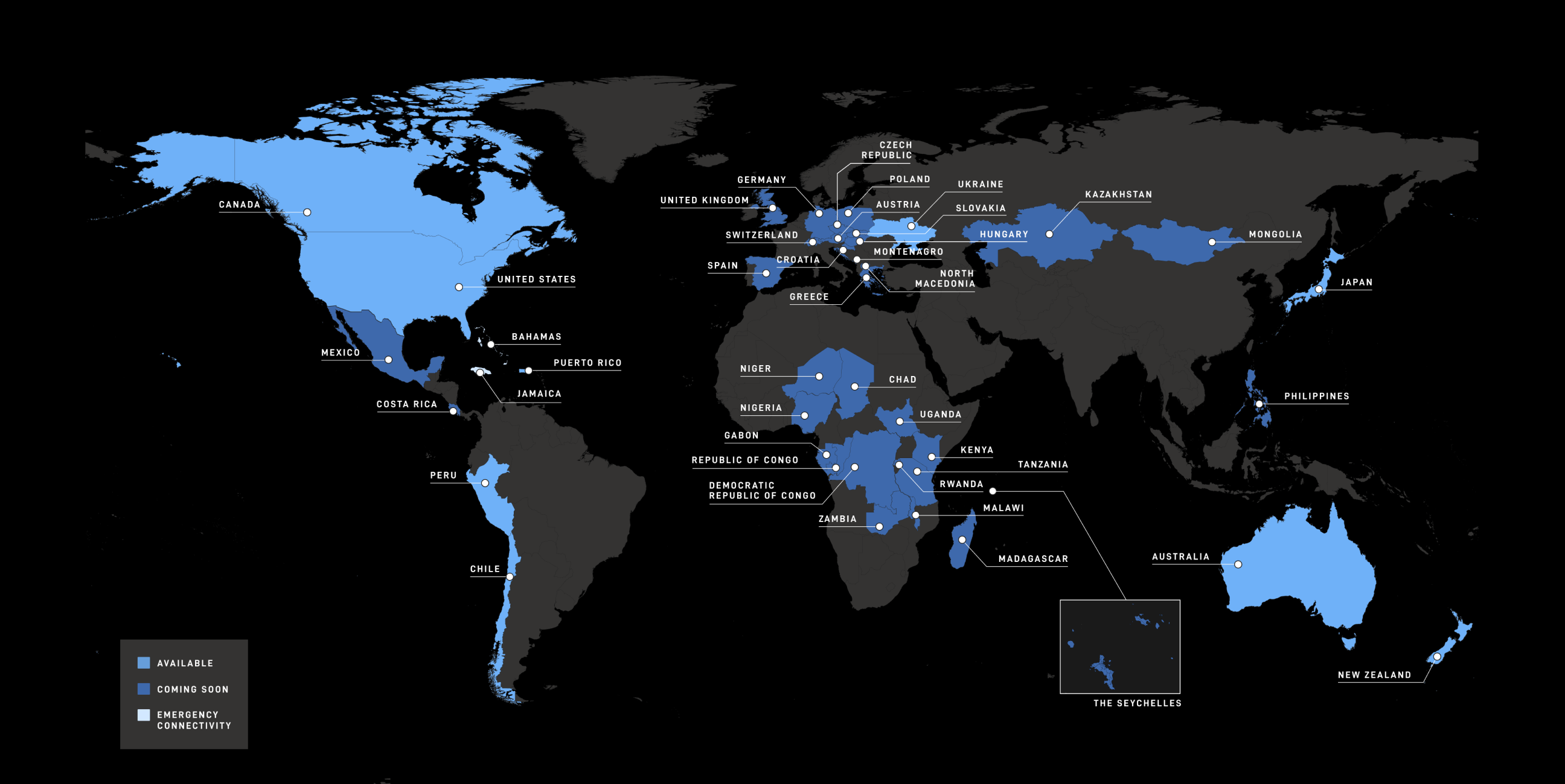
The Starlink Mobile satellite network is reshaping how people stay connected in regions where traditional terrestrial mobile services fail or don’t exist at all. By providing data for video, voice, and messaging services through satellites directly to mobile devices, Starlink Mobile brings essential communication capabilities to areas where cellular coverage simply isn’t available. With a growing footprint that now covers 32+ countries and territories and touches the lives of more than 1.7 billion people, this technology is ushering in a new era of global connectivity.
This service represents the evolution of satellite broadband into mobile telephony itself — delivering everyday smartphone functions without reliance on ground-based towers or antennas. Working in partnership with global mobile network operators, Starlink’s satellite network extends coverage to millions who previously went offline as soon as they left urban or well-served areas.

What Starlink Mobile Satellite Offers
Starlink Mobile’s satellite-to-mobile solution goes beyond basic messaging. Designed to work seamlessly with existing mobile ecosystems, it enables:
-
Voice calls and video services in mobile dead zones
-
Text and messaging services without traditional cell towers
-
Data connectivity for apps and internet browsing where terrestrial networks aren’t present
Unlike legacy satellite phones, which often require special devices and high costs, Starlink Mobile’s goal is to bring connectivity to users on standard mobile handsets through integration with existing mobile network infrastructure and partnerships with carriers.
This approach mimics how mobile networks operate — satellites act as space-based cellular stations, relaying user traffic back to ground gateways and then into conventional telecom networks. The result is an experience that feels “native” to the user’s phone, eliminating gaps in coverage due to geography or infrastructure limitations.
Global Reach and Partner Network
Starlink’s reach continues to grow rapidly. According to a 2025 report, the direct-to-cell service is now available in dozens of countries through partnerships with major mobile operators. Early commercial launches of satellite-enhanced services have occurred in markets such as the United States and New Zealand, with more rollouts planned across Europe, Asia, and beyond.
Global operators including T-Mobile (USA), KDDI (Japan), Optus (Australia), Rogers (Canada), One NZ (New Zealand), and Salt (Switzerland) are among the carriers actively integrating satellite-to-mobile capabilities into their networks. Additional operators are in discussions or early rollout phases in other regions, reflecting broad industry interest.
In Ukraine, Kyivstar has already launched Starlink’s direct-to-cell service — a pioneering deployment in Europe — offering connectivity even in remote and disaster-impacted areas where terrestrial networks are damaged or offline. The initial phase includes satellite-based messaging, with voice and data services expected to expand in 2026.
Why Starlink Mobile Satellite Matters
The implications of the Starlink Mobile satellite network extend far beyond mere convenience. In many developing, remote, or disaster-stricken regions, traditional cellular coverage is limited by cost, terrain, or infrastructure challenges. Satellite-to-mobile connectivity fills that gap, supporting:
-
Emergency communications when cell networks go down
-
Rural and remote access to data and voice services
-
Tourism and outdoor recreation safety in areas with no ground coverage
-
Business continuity for enterprises operating off the grid
This “connectivity of last resort” ensures that people remain reachable in critical moments and can continue to communicate with loved ones, access information, and participate in economic activity regardless of location.
Satellite Network Technology and Global Trends
Starlink’s system leverages its massive constellation of low-Earth orbit (LEO) satellites — already the largest commercial LEO constellation in orbit — to bring connectivity closer to users than traditional high altitude or geostationary satellites. Because these satellites orbit nearer the Earth’s surface, they can provide lower latency and faster response times, making voice, video, and data services more practical for everyday use.
The service also aligns with global trends in extending mobile network coverage to low-density regions and “not-spots” where terrestrial coverage is patchy at best. Partnerships with mobile operators enable satellites to act as extensions of existing mobile networks, allowing carriers to market enhanced coverage without installing new physical infrastructure on the ground.

The Future of Starlink Mobile Satellite Services
Looking forward, Starlink Mobile’s satellite network is expected to continue its rollout across more operators and regions. As more satellites with direct-to-mobile capabilities are launched, the service’s geographic footprint and performance will improve. This will enable deeper features like continuous mobile broadband data, full-service voice and video, and potentially IoT connectivity that serves everything from remote sensors to emergency responders.
The convergence of satellite and terrestrial mobile networks is a powerful trend in global connectivity, and Starlink Mobile is positioned as a cornerstone of this transition for decades to come. By bringing mobile coverage to billions — including the 1.7 billion people in its partner markets — the network helps bridge digital divides and ensures that being disconnected due to location becomes increasingly rare.


Leave a comment