

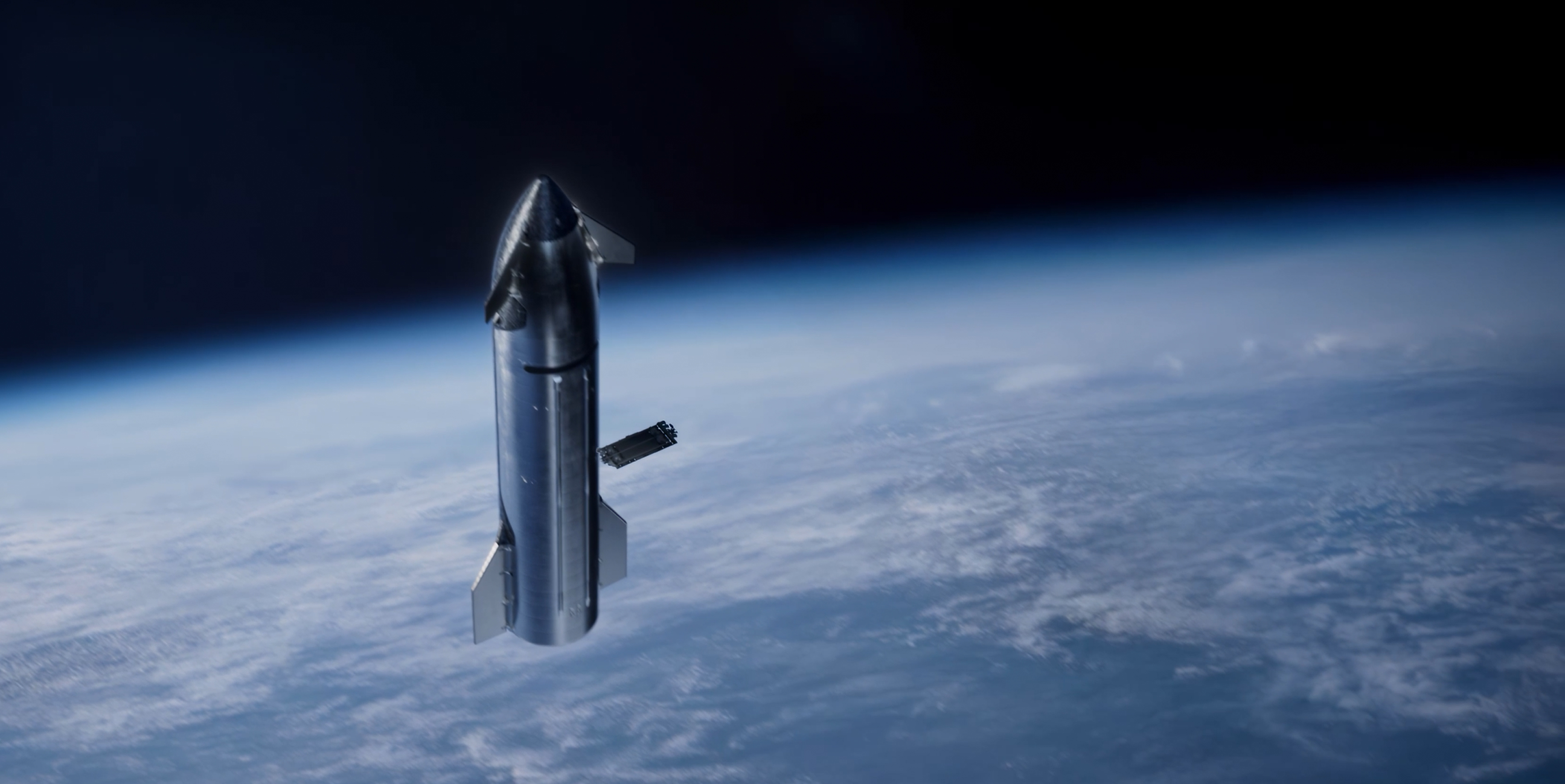
The Starlink Mobile satellite service is gearing up to transform mobile connectivity by bringing 5G-level speeds directly from space through its next-generation V2 satellite constellation. According to SpaceX’s recent announcement, the new V2 satellites will deliver 100× the data density of the current V1 generation, enabling users to stream videos, browse the internet, run high-speed apps, and make voice calls just as if they were connected to a terrestrial mobile network.
This upgrade marks a massive leap forward from the first-generation Starlink Mobile system, which primarily supports basic messaging and light data services. With the V2 architecture, Starlink Mobile aims to deliver a true satellite-to-mobile broadband experience that closes the gap between traditional cellular networks and space-based connectivity.

What Makes the V2 Starlink Mobile Satellite Network Different
The upcoming V2 Starlink Mobile satellite constellation will incorporate cutting-edge hardware and signal processing technologies designed to dramatically increase capacity and throughput. These improvements including custom-designed silicon chips, advanced phased-array antennas, and optimized protocols that allow each satellite to support significantly more simultaneous connections.
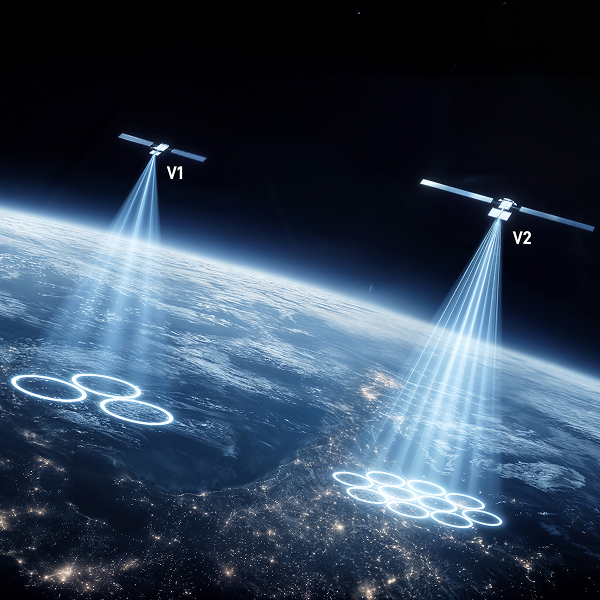
According to SpaceX, this technology upgrade will not only multiply the network’s data capacity by up to 100 times, but it will also support peak user speeds of around 150 Mbps — a performance level comparable to many terrestrial 5G networks under ideal conditions.
This means that in the future, users in remote rural areas, on ocean voyages, traversing mountains, or in regions with limited terrestrial infrastructure could enjoy seamless video streaming, real-time communication, high-speed internet browsing, and cloud-based services on their smartphones — all connected directly to satellites overhead.
Transitioning from V1 to V2: A Connectivity Revolution
Starlink Mobile’s first-generation satellites (V1) laid the groundwork by enabling basic messaging, location sharing, and low-data services for users in remote and underserved locations. But the V2 upgrade fundamentally changes the game, transitioning the service from “basic mobile connectivity” to full broadband-capable satellite service.
Under the V2 design:
-
Data density increases up to 100×, meaning the network can handle much more simultaneous user traffic.
-
Throughput per satellite improves roughly 20× compared to V1 satellites.
-
Speeds of up to ~150 Mbps per user bring satellite connectivity closer to terrestrial 5G performance levels.
-
Seamless service across streaming, browsing, apps, and voice will be supported, making the experience familiar for smartphone users.
These advancements make satellite-to-mobile services far more practical for everyday use, especially in places where establishing ground-based infrastructure is impractical or economically infeasible.
Why 5G from Space Matters for Global Connectivity
As digital lifestyles increasingly rely on uninterrupted internet access, the ability to provide 5G-like performance from orbit helps close coverage gaps in regions where rural, mountainous, island, or emergency situations leave people without reliable mobile service. Starlink Mobile’s V2 satellites aim to fill that gap by offering broadband performance to unmodified smartphones without requiring additional satellite terminal hardware.
This satellite-to-mobile connectivity approach complements existing terrestrial networks operated by mobile carriers — including the most recent implementations such as Virgin Media O2’s satellite-powered mobile data service in the UK — by automatically switching to satellite signals when traditional cellular coverage fails.
Unlike older satellite phone systems, which required special hardware and often delivered limited speeds, the Starlink Mobile V2 satellite network is designed to integrate with standard mobile devices, making it a viable option for everyday connectivity and genuinely extending coverage “everywhere.”
Beyond Traditional Coverage: The Next Frontier
As Starlink’s V2 satellites are launched beginning in mid-2027 and beyond, the network will evolve into an extensive non-terrestrial mobile system that augments 5G networks operated by carriers around the world. The goal isn’t simply to supplement existing networks but to provide a seamless hybrid experience where devices can transition smoothly between terrestrial and satellite coverage without interruption, enabling capabilities once thought impossible.
SpaceX has also sought regulatory approvals — including an FCC plan to deploy an additional 7,500 Gen2 satellites — to ensure enough capacity and spectrum flexibility to support these next-generation mobile services globally.
Challenges and Adoption Path
While the technological promise is huge, deploying a constellation capable of delivering true 5G speeds from space requires careful rollout and industry collaboration. Mobile carriers will need to integrate satellite-aware devices and spectrum management systems to fully support the new V2 services. However, early partnerships — like those in the UK and in Europe announced with local operators — show the industry’s growing confidence that satellite-enhanced connectivity is viable at scale.
Regulatory frameworks, handset compatibility with satellite signals, and efficient spectrum use will play key roles in how soon consumers can experience uninterrupted satellite broadband on their phones — particularly in areas where conventional networks have never reached.


Leave a comment