

Wheels Up. WiFi On. A New Standard for Private Aviation Connectivity.
Slate Aviation Starlink Partnership Announced in November 2026
The Slate Aviation Starlink partnership marks another important development in satellite-powered in-flight connectivity.
On November 10, 2026, Slate Aviation announced plans to install Starlink high-speed internet across its entire aircraft fleet.
The private aviation operator serves customers through on-demand charter flights, fractional and whole-aircraft ownership, and premium by-the-seat shuttle services.
With the new connectivity system, Slate aims to give owners, members, and passengers access to internet services that support streaming, communication, and work during flight.
Installations are scheduled to begin in December 2026.
The company expects to complete the fleetwide rollout during 2027, although its press release and social media announcement provide different target dates.
The development reflects growing demand for reliable internet access in private aviation, where passengers increasingly expect to remain connected throughout their journey.

1. What Is the Slate Aviation Starlink Partnership?
The Slate Aviation Starlink agreement will bring SpaceX's satellite broadband technology to Slate's entire fleet.
Rather than installing the service on only a small number of aircraft, Slate has announced a fleetwide upgrade.
The program includes aircraft used for different customer services.
Who Will Benefit?
The planned rollout covers:
-
Fractional aircraft owners: Customers who own a share of an aircraft.
-
Whole-aircraft owners: Clients using aircraft ownership arrangements.
-
On-demand charter passengers: Travelers booking private flights.
-
Slate members: Customers participating in Slate's membership offerings.
-
By-the-seat shuttle passengers: Travelers booking individual seats on premium shuttle services.
Slate intends to make the connectivity experience consistent across its aircraft.
However, during the installation period, individual aircraft may have different WiFi capabilities until their upgrades are completed.
2. Slate Aviation Starlink Installation Timeline
The Slate Aviation Starlink rollout begins in December 2026.
The announcement establishes a clear starting point but contains a difference in the projected completion schedule.
Official Timeline
| Milestone | Announced Timing |
|---|---|
| Partnership announcement | November 10, 2026 |
| First installations scheduled | December 2026 |
| Press release completion target | Early 2027 |
| Slate Aviation X post completion target | Mid-2027 |
| Current rollout status | Announced; installations not yet confirmed complete |
The difference between the two completion targets has not been publicly explained.
Passengers should therefore treat 2027 as the expected completion period and check the operator's latest information for specific aircraft.
Why a Fleetwide Rollout Takes Time
Installing satellite internet on an aircraft involves more than attaching a consumer WiFi router.
Aviation connectivity systems require aircraft-compatible equipment, installation planning, and applicable regulatory approvals.
Scheduling can also depend on aircraft availability and maintenance arrangements.
As a result, a fleetwide upgrade may take several months.
3. More Than 30 Bombardier Aircraft Expected to Receive Starlink
According to Slate Aviation, the company and its affiliates own or operate more than 30 Bombardier aircraft.
The fleet includes aircraft used for private aviation and premium shuttle services.
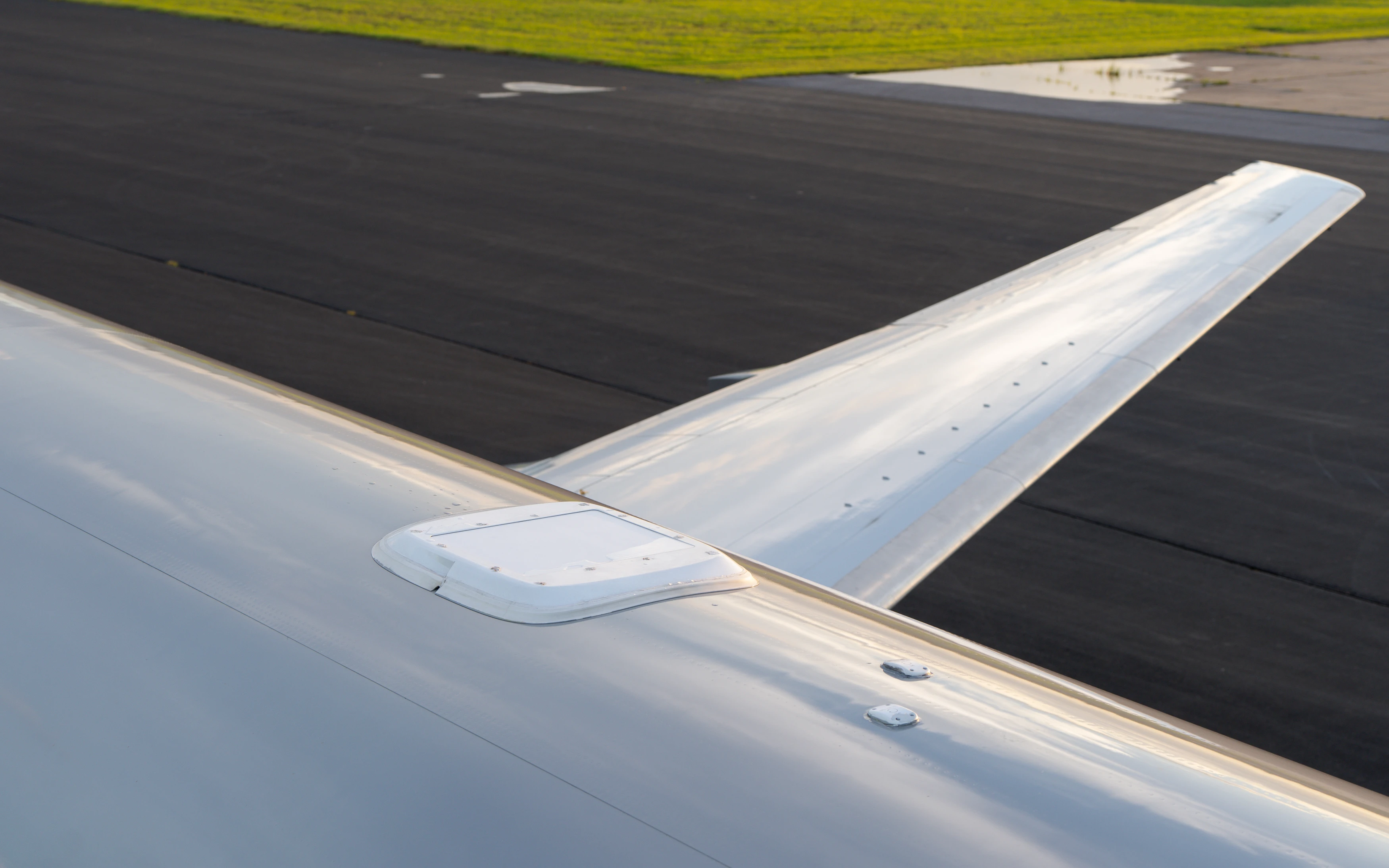
Industry coverage identifies Bombardier Challenger 850 aircraft and VIP-configured CRJ-200 aircraft among the types involved in the upgrade.
Slate Aviation Fleet Overview
| Category | Details |
|---|---|
| Operator | Slate Aviation |
| Headquarters | West Palm Beach, Florida |
| Aircraft manufacturer | Bombardier |
| Fleet size | More than 30 aircraft, including affiliates |
| Services | Charter, ownership, and premium shuttles |
| Annual flight activity | More than 7,000 flights |
| Employees | More than 300 |
| Planned internet provider | Starlink |
The scale of the deployment makes the project significant for the private aviation sector.
Instead of offering upgraded connectivity on selected aircraft, Slate plans to establish a common satellite internet platform across its fleet.
4. How Starlink In-Flight Internet Works
The Slate Aviation Starlink service uses SpaceX's low Earth orbit satellite network.
Traditional satellite internet systems often depend on satellites positioned much farther from Earth.
Starlink uses satellites operating in low Earth orbit, which reduces the distance signals must travel.
Lower-Latency Connectivity
Shorter signal paths can support lower latency compared with conventional geostationary satellite systems.
Lower latency can improve responsiveness during interactive internet activities.
Examples include web applications, cloud-based collaboration, and supported real-time communication.
High-Bandwidth Applications
Starlink's aviation system is designed to support bandwidth-intensive activities.
These may include:
-
Video streaming.
-
Online meetings.
-
Internet-based calls.
-
Cloud document access.
-
Email and messaging.
-
General web browsing.
Actual performance depends on network conditions, aircraft equipment, connected users, and service availability.
Coverage Beyond Terrestrial Networks
Aircraft often fly over areas where conventional mobile networks are unavailable.
Satellite internet provides a communication path that does not depend on nearby ground-based cellular towers.
Slate specifically highlights the importance of connectivity over open water on coastal routes.
5. What Passengers Can Do With Slate Aviation Starlink WiFi
For private aviation customers, the main value of Slate Aviation Starlink is the ability to use flight time more flexibly.
Join Business Meetings
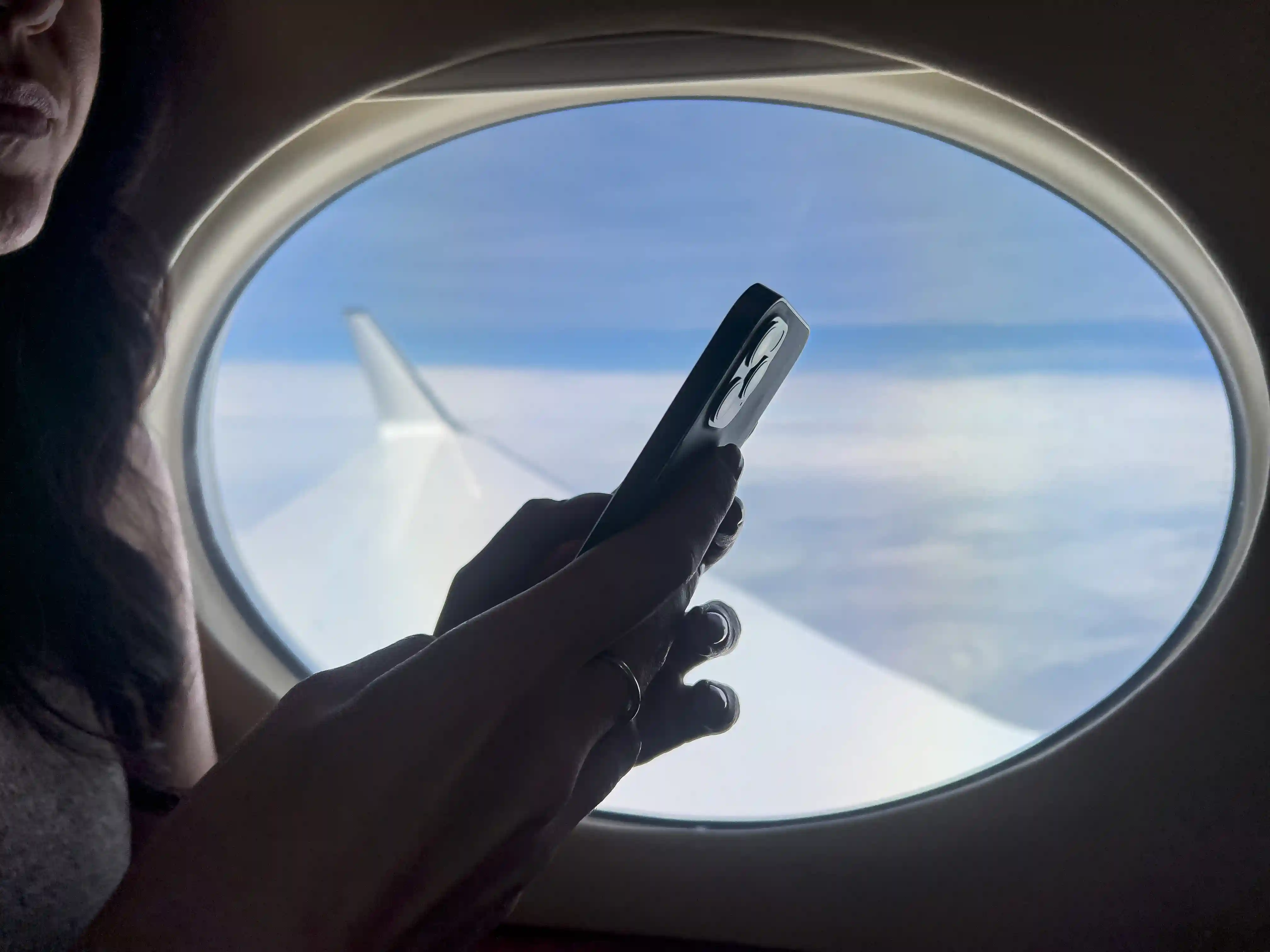
Passengers may be able to participate in supported online meetings while traveling.
This can help business travelers remain productive between destinations.
Stream Entertainment
Streaming movies and other online content can make longer journeys more enjoyable.
Slate identifies entertainment streaming as a major benefit of the new service.
Make Internet-Based Calls
Unlike some commercial airlines that restrict voice or video calls, Slate's announcement explicitly describes the ability to make calls during flight.
Passengers should still follow the operator's onboard policies and any applicable restrictions.
Access Cloud-Based Work
Passengers may use compatible online applications to review documents, send messages, and collaborate remotely.
This can be particularly useful for travelers whose schedules involve frequent flights.
Stay Connected Over Coastal Routes
Slate highlights routes involving Nantucket and the Hamptons, where aircraft may travel over open water.
Satellite coverage can support connectivity in areas without terrestrial cellular service.
6. Why Starlink Matters for Private Aviation
The Slate Aviation Starlink announcement reflects a broader change in expectations for premium air travel.
Private aviation customers often value flexibility, privacy, and control over their schedules.
Reliable connectivity can extend those benefits into the cabin.
Productivity During Travel
For business travelers, time spent in the air may be an opportunity to complete work rather than disconnect from it.
Internet access can support communication and digital workflows.
A More Consistent Passenger Experience
Fleetwide connectivity can reduce differences between individual aircraft.
Slate intends to offer a similar internet experience to owners, charter clients, and shuttle passengers.
Connectivity as a Competitive Feature
Internet performance has become an important consideration when evaluating private aviation services.
An operator's connectivity offering may influence customer preferences alongside aircraft comfort, scheduling, and service quality.
However, the quality of the experience will depend on the successful installation and operation of the system.
7. Slate Aviation Starlink vs. Traditional In-Flight WiFi
The planned upgrade also illustrates the differences between satellite connectivity architectures.
Industry reporting indicates that Slate is replacing its existing Gogo Avance L5 connectivity equipment with Starlink.
Technology Comparison
| Feature | Existing Aviation Connectivity | Starlink Aviation |
|---|---|---|
| Network architecture | Depends on installed system | Low Earth orbit satellites |
| Ground cellular dependency | Some systems use air-to-ground links | Satellite-based connection |
| Latency | Varies by network technology | Designed for lower latency |
| Streaming support | Depends on available bandwidth | Designed for high-bandwidth use |
| Over-water coverage | Depends on network and equipment | Satellite coverage in supported regions |
| Aircraft installation | Aviation-specific equipment | Aviation-specific equipment |
The comparison is about network design, not a guarantee that Starlink will outperform every existing aviation system under all conditions.
Actual speed, availability, and latency must be evaluated using operational data.
8. Starlink's Growing Role in Aviation
The Slate Aviation Starlink agreement is part of a broader expansion of low Earth orbit satellite internet in aviation.
Commercial airlines and private operators are increasingly evaluating satellite broadband to improve onboard connectivity.
Private Aviation
Private aircraft operators may prioritize video calls, cloud-based work, streaming, and connectivity over remote flight routes.
These requirements can make high-bandwidth satellite services attractive.
Commercial Airlines
Airlines are also adopting Starlink to provide improved onboard internet services.
However, access conditions differ by carrier.
Some airlines offer complimentary WiFi, while others may apply different eligibility or pricing rules.
Aviation Hardware Is Specialized
Starlink aviation equipment is designed and installed for aircraft use.
It should not be confused with residential Starlink terminals or portable Starlink Mini equipment.
A consumer Starlink mounting bracket, power adapter, or cable is not automatically suitable for an aircraft.

9. Starlink Connectivity Beyond Aircraft
The Slate Aviation Starlink rollout also illustrates how satellite broadband supports connectivity across different environments.
While aviation systems require specialized equipment, Starlink also provides consumer hardware for compatible ground-based applications.
RV and Camping Connectivity
Portable Starlink equipment can provide internet access in supported locations where conventional networks are limited.
Users should confirm their service plan, power requirements, and mounting arrangements.
Remote Homes
Residential Starlink systems can provide broadband access for households in rural or remote areas.
A suitable installation requires an unobstructed sky view and compatible equipment.
Portable Power Solutions
Starlink Mini users may evaluate compatible batteries, vehicle power adapters, and DC power accessories for portable applications.
Electrical compatibility must be verified for the exact terminal.
EDUP Starlink Accessories
EDUP supplies third-party accessories for supported consumer Starlink installations, including:
-
Portable battery kits.
-
Vehicle power adapters.
-
Magnetic, wall, and pole mounts.
-
Compatible power and network cables.
-
Selected RV and outdoor installation accessories.
Explore available products at EDUP Starlink Accessories.
These products are intended for compatible consumer Starlink systems and are not marketed as substitutes for certified aviation hardware.
10. What Should Slate Aviation Customers Know?
Before expecting Slate Aviation Starlink connectivity on a specific flight, customers should understand the announced rollout.
Passenger Checklist
| Question | Current Information |
|---|---|
| Has the partnership been announced? | Yes, November 10, 2026 |
| Have installations begun? | Scheduled for December 2026 |
| Will all Slate aircraft receive Starlink? | That is the announced plan |
| Will charter passengers have access? | Yes, on equipped aircraft |
| Will shuttle passengers have access? | Yes, on equipped aircraft |
| Can passengers stream content? | Intended service capability |
| Are internet-based calls supported? | Described in the announcement |
| When will installation finish? | Planned for 2027; target dates differ |
| Is the service free? | Pricing has not been specified publicly |
Until installation is complete, customers should confirm WiFi availability directly with Slate Aviation for their specific aircraft or booking.

Final Thoughts
The Slate Aviation Starlink partnership represents another significant step in bringing high-speed satellite internet to private aviation.
Announced on November 10, 2026, the program will introduce Starlink connectivity across Slate's fleet of more than 30 Bombardier aircraft.
Installations are scheduled to begin in December 2026, with fleetwide completion targeted for 2027.
The service is intended to support streaming, internet-based calls, business productivity, and connectivity during coastal and over-water flights.
For private aviation passengers, the upgrade could make time spent in the air more connected and productive.
For the broader satellite internet industry, it demonstrates continued expansion of low Earth orbit broadband into specialized mobility markets.
Read the official Slate Aviation announcement for the latest company information.
For consumer Starlink mounting, power, and cable accessories, visit EDUP Starlink Accessories.


Leave a comment