

Artificial intelligence is rapidly transforming agriculture, helping farmers improve productivity, reduce chemical use, and address ongoing labor shortages. However, AI-powered farming depends on one critical requirement: reliable, high-speed connectivity. In many rural regions where crops are grown, traditional LTE and broadband networks are often unavailable or unreliable. This is where Starlink Carbon Robotics is changing the future of precision agriculture.
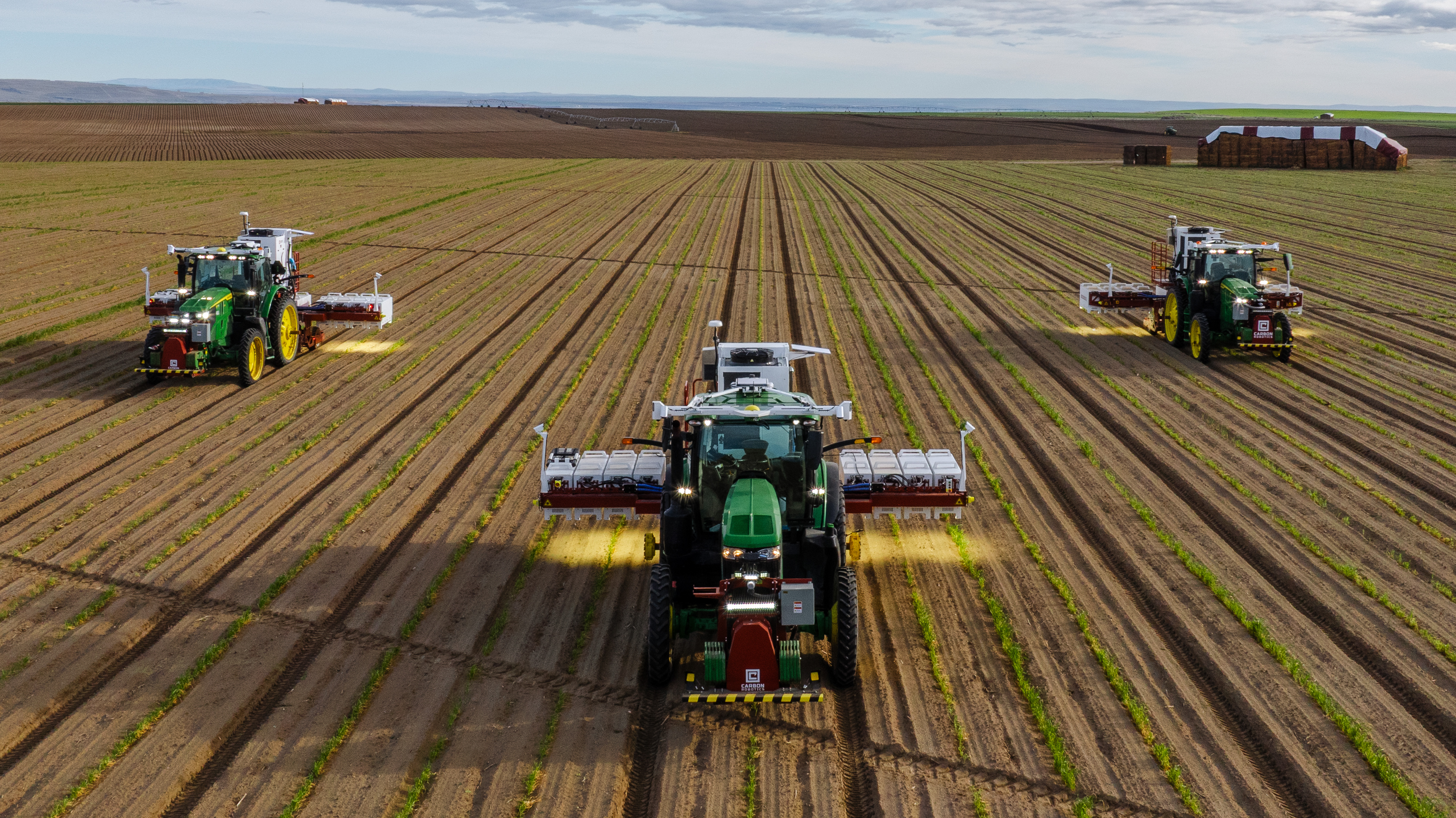
Starlink Carbon Robotics combines SpaceX's low-Earth-orbit satellite internet with Carbon Robotics' advanced autonomous farming technology to deliver continuous, real-time connectivity for agricultural operations across 15 countries, including the United States, Canada, Australia, New Zealand, and several European nations. By making reliable broadband available in remote fields, Starlink Carbon Robotics enables autonomous tractors, AI-powered LaserWeeder systems, remote fleet management, and real-time machine learning at a global scale.
Unlike conventional farm equipment that relies on inconsistent cellular coverage, Starlink Carbon Robotics provides uninterrupted satellite connectivity wherever crops are grown. This reliable network has become the backbone of Carbon Robotics' global operations, supporting continuous fleet control, remote intervention, rapid AI model development, and improved agricultural productivity. As precision agriculture becomes increasingly data-driven, Starlink Carbon Robotics demonstrates how satellite internet is evolving into critical infrastructure for the future of farming.

What Is Starlink Carbon Robotics?
Starlink Carbon Robotics is a partnership between SpaceX's Starlink satellite internet service and Carbon Robotics, a company specializing in physical AI and autonomous agricultural robotics.
Carbon Robotics develops several innovative products, including:
- LaserWeeder G2
- Carbon ATK autonomous tractor platform
- Large Plant Model (LPM)
- Computer vision weed identification
- Autonomous field operations
These systems require continuous broadband connectivity to stream real-time data, upload field images, receive software updates, and allow remote operators to intervene whenever necessary.
By using Starlink Carbon Robotics, every LaserWeeder in Carbon Robotics' global fleet remains connected even in remote agricultural regions where cellular coverage is unavailable.
Why Reliable Connectivity Matters in Agriculture
Modern precision farming generates enormous amounts of data.
Each LaserWeeder continuously captures high-definition images of crops and weeds while traveling through fields.
Those images are analyzed instantly using Carbon Robotics' AI system, allowing lasers to eliminate weeds without damaging crops.
Without reliable broadband, this process becomes significantly more difficult.
Starlink Carbon Robotics provides farmers with:
- Continuous broadband coverage
- Low latency communications
- High upload bandwidth
- Reliable remote monitoring
- Consistent performance across rural environments
Unlike LTE networks that frequently lose signal outside populated areas, satellite connectivity allows AI systems to remain operational throughout entire fields.
AI Farming Across 15 Countries
One of the most impressive achievements of Starlink Carbon Robotics is its global deployment.
Today, Carbon Robotics' LaserWeeder fleet operates in:
- United States
- Canada
- Australia
- New Zealand
- Multiple European countries
Overall, the company's autonomous agricultural systems are deployed across 15 countries.
This international expansion would be significantly more difficult without a global connectivity platform capable of maintaining consistent performance regardless of location.
Because Starlink operates through a worldwide low-Earth-orbit satellite constellation, Starlink Carbon Robotics delivers a standardized broadband experience across multiple continents, simplifying fleet management and software deployment.

Enabling Real-Time Remote Operations
Carbon Robotics' autonomous tractor solution, Carbon ATK, supports remote supervision.
Operators located at a centralized control center can monitor equipment using live video streams from onboard cameras.
If unusual situations occur, trained operators can immediately intervene.
This capability depends entirely on:
- High-speed uploads
- Low latency
- Stable connectivity
- Continuous broadband availability
The Starlink Carbon Robotics platform enables 24/7 remote fleet management without relying on inconsistent rural LTE networks.
Accelerating AI Development
Perhaps the greatest advantage of Starlink Carbon Robotics extends beyond field operations.
The company's Large Plant Model (LPM) has grown dramatically thanks to reliable satellite connectivity.
Over just 24 months, Carbon Robotics expanded its agricultural training dataset from 10 million images to more than 150 million labeled plant images.
This enormous dataset now represents one of the world's largest agricultural AI image collections.
Reliable broadband provided by Starlink Carbon Robotics enables rapid uploads of massive image files collected directly from working farms around the world.
As more data enters the AI system, model accuracy continues improving across different crops, weeds, climates, and growing conditions.
Faster AI Model Training
Developing agricultural AI models traditionally required significant processing time.
With continuous data collection enabled by Starlink Carbon Robotics, AI model creation has become dramatically faster.
According to Carbon Robotics:
- AI model generation improved by more than 10×
- Model creation time dropped from hours to minutes
- Continuous updates improve field performance
This allows new plant recognition models to be deployed rapidly while improving weed detection accuracy across different farming environments.

Better Results for Farmers
The ultimate measure of agricultural technology is its impact on farm productivity.
Farmers using Starlink Carbon Robotics have reported several measurable benefits, including:
- Up to 50% higher crop yields
- Significant reductions in herbicide use
- Lower labor requirements
- Improved operational efficiency
- Increased sustainability
- Faster field operations
Because LaserWeeder removes weeds using precision lasers instead of chemical herbicides, farmers can reduce input costs while supporting more sustainable agricultural practices.
Starlink as Critical Infrastructure for Physical AI
The success of Starlink Carbon Robotics demonstrates that satellite internet is becoming far more than a rural broadband solution.
For autonomous machines operating beyond traditional communications infrastructure, reliable connectivity becomes essential infrastructure.
Benefits include:
- Continuous fleet monitoring
- Global software updates
- AI dataset expansion
- Real-time diagnostics
- Remote intervention
- Scalable international deployment
As physical AI becomes increasingly common across agriculture, mining, construction, and logistics, satellite broadband will continue enabling autonomous systems in environments where conventional networks cannot provide reliable coverage.
The Future of Connected Agriculture
Agriculture is entering an era where connectivity, artificial intelligence, robotics, and automation work together to improve productivity.
The success of Starlink Carbon Robotics illustrates how satellite communications can accelerate innovation by connecting autonomous machines operating in some of the world's most remote agricultural regions.
As AI models continue learning from larger datasets and autonomous equipment becomes more capable, reliable global broadband will become even more important.
By combining advanced satellite internet with cutting-edge agricultural robotics, Starlink Carbon Robotics is helping farmers produce more food with fewer chemicals, greater efficiency, and smarter technology.
Conclusion
Starlink Carbon Robotics represents one of the strongest examples of how satellite internet is transforming modern agriculture.
Operating across 15 countries, Carbon Robotics relies on Starlink as its global primary broadband solution, enabling continuous fleet control, real-time remote operations, rapid AI development, and autonomous farming at scale.
The partnership has already helped expand one of the world's largest agricultural AI datasets, accelerate machine learning by more than tenfold, reduce herbicide dependence, and improve crop yields by up to 50%.
As agriculture embraces automation and artificial intelligence, Starlink Carbon Robotics demonstrates that reliable connectivity is no longer just a convenience—it is the foundation for the next generation of precision farming.
For professional Starlink mounts, power solutions, PoE accessories, and installation kits, visit https://wxplink.com.
To learn more about Starlink Business and enterprise connectivity, visit https://www.starlink.com/business


Laissez un commentaire